

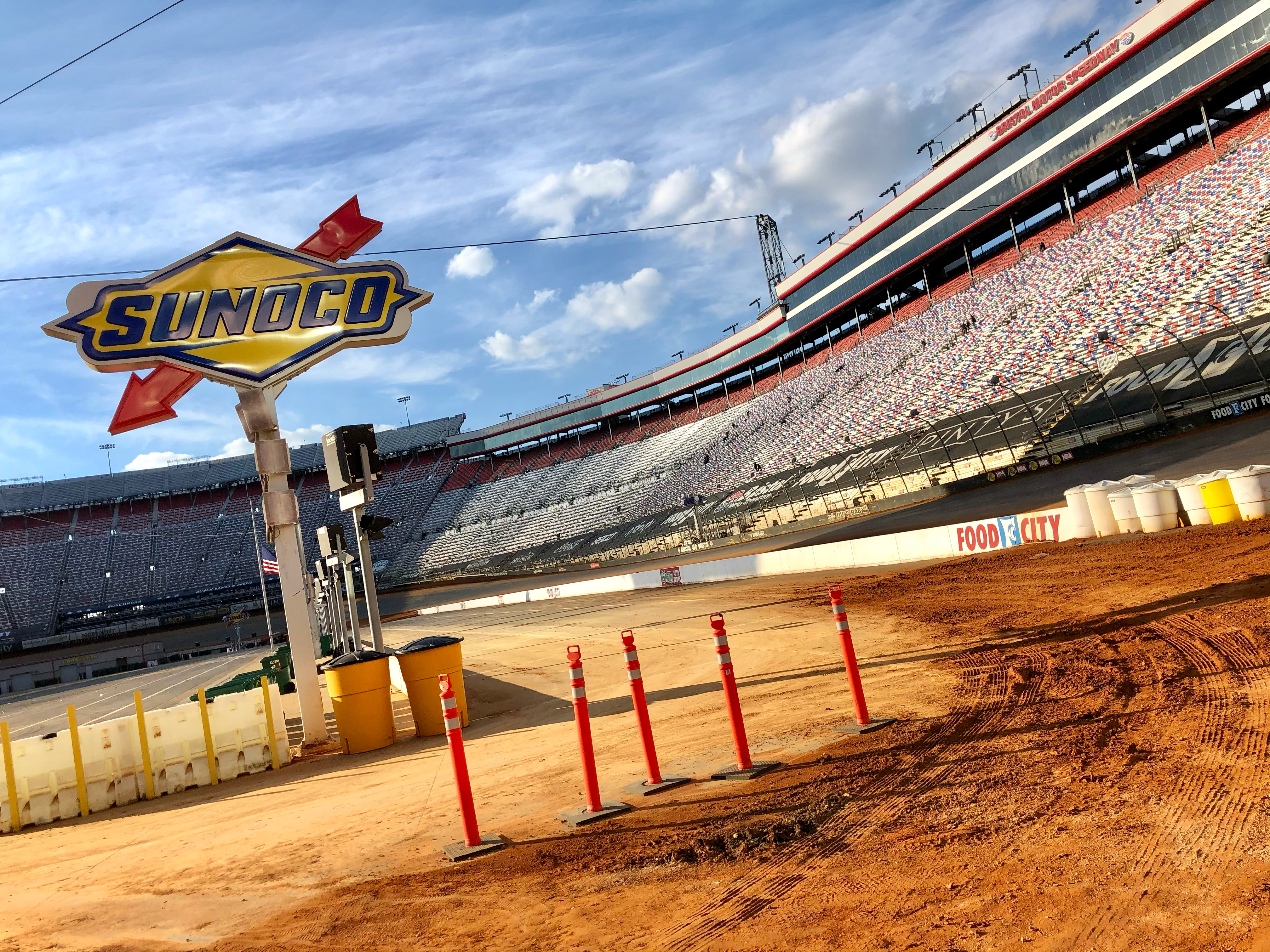
Dirt track racing is auto racing on an unpaved track, usually a short oval with a packed dirt or clay surface. Depending on the track and the night, you might see Dirt Late Models, Sprint Cars, Modifieds or local stock cars. Most programs run several short preliminary races before the main event, called the feature.
The easiest way to get hooked is to walk the pits before hot laps, if the track allows it and you have a pit pass. Meet a few drivers, then pick one to follow from the heat races through the rest of the night. That’s where my work as a storyteller comes in. I hope the stories I tell about these drivers give you someone to root for the next time you go to a race.
If you’re new to the sport, this guide breaks down some of the first questions fans ask. What kinds of cars race on dirt? How does a race night work? Can drivers make a living at it? And where can you go to watch your first race?
What makes racing on dirt different?
The surface changes as cars run over it. A track can start the night with moisture and plenty of grip, then dry out and get slick in the lanes the cars have worn in. Loose dirt can build into a ridge called the cushion. A driver who gets the right-rear tire against that ridge can use it like a curb, plant the car and carry more speed out of the corner. It can be treacherous, too. Get up over the cushion or hit it at the wrong angle and the car can lose momentum or get out of shape.
Watch two cars enter the same corner. One driver may take the shortest route along the bottom. The other may go high to carry more speed onto the straightaway. A move that works early in the feature can stop working once the track changes or the leaders catch slower traffic.
What kinds of cars race on dirt?
There’s no single count of dirt track racing classes. Tracks and sanctioning bodies set their own rules, so two cars that look similar may run in different divisions. Here are some of the cars you’re likely to see.
Dirt Late Models. Look for the wide fenders, low nose and tall rear spoiler. These are purpose-built race cars with tubular chassis. A national-touring Super Late Model makes more than 800 horsepower and typically runs under a 2,350-pound minimum-weight rule, though the details can vary by event. The front wheels move independently on coil springs, while a four-link rear suspension controls how the rear axle moves as the car corners and puts power down. Watch a Late Model in the middle of a turn and you’ll often see the left rear of the body rise as the car loads up on the right side. Local tracks may also run Crate or Limited Late Models, which look similar and compete under different engine rules. World of Outlaws Late Model visual guide · DIRTcar technical rules
Sprint Cars. The exposed wheels and compact body are the giveaways. A national-level winged 410 Sprint Car makes about 900 horsepower from a methanol-burning V8 and must weigh at least 1,425 pounds with the driver under World of Outlaws rules. The big top wing adds downforce at speed. Most Sprint Cars use torsion bars, which twist to act as springs as the car moves over bumps and loads up in the corners. You’ll also see non-wing Sprint Cars and classes called 360s or 305s. Those numbers, like 410, refer to engine displacement in cubic inches. World of Outlaws Sprint Car visual guide
Modifieds. This style of Modified is easy to spot by its exposed front wheels and bodywork over the rear wheels. Two of the most familiar versions are IMCA Modifieds and DIRTcar UMP Modifieds. IMCA gives teams a choice of a sealed crate engine, a spec engine built to a prescribed parts list, or an engine subject to a claim rule. UMP has its own chassis, body and tire rules. One visible difference is the rear spoiler. UMP allows up to three inches with one deck configuration, while IMCA allows a two-inch spoiler with its crate and spec engine options. IMCA rules · DIRTcar UMP Modified rules
The United States Modified Touring Series (USMTS) races the same general style of car under a separate rulebook. It allows several engine packages, and the engine choice affects how much the car must weigh and how tall a spoiler it can run. From the stands, you’ll recognize the same basic shape across all three. Underneath, the cars can be built to different specifications. USMTS rulebook
Stock Cars and other local classes. These go by names such as Stock Cars, Street Stocks, Hobby Stocks or Sport Compacts. They’re often based on production cars, with rules that vary by track. A weekly program might feature several of these divisions on the same night. IMCA divisions guide
Crown Vics. Yes, the old police cruisers. Some dirt tracks run entry-level classes for Ford Crown Victorias and their relatives, the Mercury Grand Marquis and Lincoln Town Car. Tracks generally keep them close to stock and require racing safety equipment. You may recognize them from Cleetus McFarland, who brought Crown Vic racing to a wider audience through events like the Freedom 500 and LeMullets on the paved oval at his Freedom Factory. Dirt tracks run their own versions of the class.
How does a dirt track race night work?
A typical program starts with hot laps, which are short practice sessions. When an event uses time trials, drivers often get two qualifying laps. Their quickest lap helps set the starting order for the heat races. Some tracks skip time trials and set their heat lineups by draw or another procedure.
The field is split into heats, often eight to 10 laps apiece. The top finishers typically advance to the feature, and the heat results help set the starting lineup. Some shows use a dash to set the front rows. When more cars enter than can start the main event, a B-main, or last-chance race, can fill some of the remaining spots.
The feature, also called the A-main, is the main race for that class. A track running four divisions may have four feature winners that night. World of Outlaws race-night format
What are the different levels of dirt track racing?
Dirt track racing generally has three levels, from weekly shows at your local track to national tours that cross the country.
One of my favorite things about the sport is how easily those levels can cross. A guy who works a regular job and races at his local track every weekend can wind up in the same heat as Kyle Larson. Larson came up racing open-wheel dirt cars before becoming a three-time NASCAR Cup Series champion, and he still shows up to race the locals at events like Pennsylvania Sprint Speedweek. Larson’s NASCAR bio · Larson at Pennsylvania Sprint Speedweek
Weekly racing. Drivers race at their local track, often while working a regular job during the week. For most, it’s a hobby. A good night can help pay for tires, fuel or repairs before the next race.
Regional racing. Drivers travel to tracks across their part of the country. Some follow a regional series for points, while others pick the races with the best payouts. You can make a living at this level, but it usually takes winning often and finding enough well-paying races within a reasonable haul.
National racing. Teams travel across the country, either following a tour full time or building an independent schedule around major events. Most full-time drivers on the biggest national tours race for a living. They may still show up at a regional race or a weekly track when their schedule allows.
Can you make a living dirt track racing?
Yes. For an established driver with a competitive team, running a national tour or putting together an independent schedule of big-paying races are two of the clearest paths. Touring teams can earn nightly purse money and a year-end points check. Independent teams can pick their races based on the payout, travel costs and where they run well. Three-time Lucas Oil champion Jonathan Davenport took that second route in 2026.
How much do dirt racing champions get paid?
The biggest national tours can pay six figures for a championship. In 2026, David Gravel’s World of Outlaws Sprint Car Series title was worth $350,000. Brandon Sheppard’s Lucas Oil Late Model Dirt Series championship was worth $250,000 to Rocket1 Racing. Bobby Pierce earned $225,000 in the World of Outlaws Late Model Series points fund.
Those year-end awards are separate from what teams earn in race purses. For instance, Gravel earned an additional $778,930 in racing purses alone, pushing his total earnings over the $1.1 million mark. Pierce, meanwhile, earned north of $1.5 million in total earnings during his 30-win campaign in 2026, which also included the $75,000 FloRacing Night in America title.
Rico Abreu won the High Limit Racing championship in 2026. The series reported $2.6 million in combined payouts to 10 High Roller Club teams and $450,000 to five Joker Fund teams. Abreu’s individual 2026 payout remains unconfirmed. His team’s 2025 title check was $250,000.
The United States Modified Touring Series advertised $50,000 for its national championship, won by Brandon Davis. The American Sprint Car Series listed $40,000 for first in its points fund, and Sam Hafertepe Jr. won the title.
How do dirt racers make money besides winning races?
Some drivers earn a salary from a car owner, a share of the winnings, or both. Merchandise can be a big part of a driver’s income, too. Fans buy shirts, hats and die-casts at the track and online, so a driver can bring in money even on a night when they finish outside the top 10.
For drivers who own their teams, purse money, sponsorship and merch sales help cover engines, tires, fuel, crew pay and travel. When you see a big check in victory lane, what the driver takes home depends on who owns the car, who pays the bills and how they’ve agreed to split the winnings.
How do I find or watch a dirt track race?
A local track’s weekly show is a great first dirt race. Search for “dirt tracks near me.” Before you leave, check the track’s schedule for the classes running, the start time and any weather updates. Bring ear protection, especially for kids, and expect some dust in the grandstands.
If you’d rather watch from home, start with the series or event you want to see.
FloRacing carries live races and replays from the Lucas Oil Late Model Dirt Series, High Limit Racing and USAC, among others. I cover Dirt Late Model racing for FloRacing and DirtonDirt.com. FloRacing schedule
DIRTVision carries live races and replays from the World of Outlaws Sprint Car and Late Model series and the Super DIRTcar Series. Its annual Platinum FastPass includes the Knoxville Nationals and 360 Nationals. Those events are excluded from the monthly plan. DIRTVision series coverage
Hunt the Front TV is another option for regional dirt racing in the Southeast. Its subscription includes the service’s live streams and on-demand replays.

